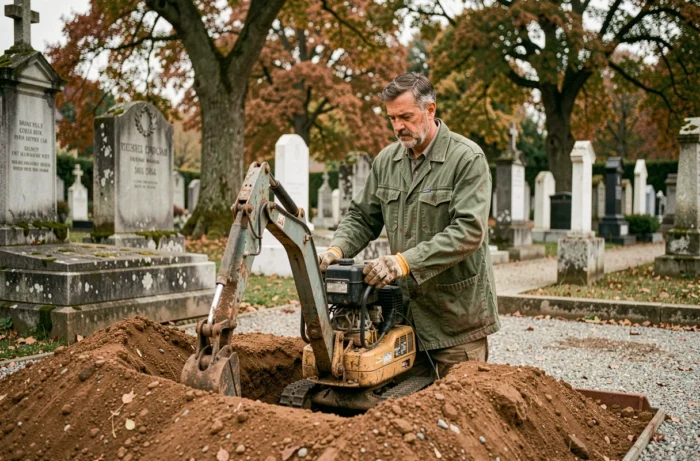
When a loved one passes away and burial in the ground is chosen, the digging of the grave represents a separate expense item on the funeral estimate. The cost of digging a grave varies depending on the municipality, the required depth, and the company selected. Understanding what is behind this billing line helps avoid unpleasant surprises at a time when the family is least available to negotiate.
Digging a grave: what the service actually covers
On a funeral estimate, the line “digging” refers to the mechanical or manual excavation of the grave, as well as its filling after the ceremony. The information notice that funeral operators must provide to families specifies that the estimate must include the personnel responsible for the burial, digging, and filling.
This detail is important. Digging and filling are two distinct operations, often billed together. If the estimate mentions a “burial package” separate from “digging,” it is necessary to ask what each line exactly covers. Some packages already include the grave work, while others do not.
For a burial in a vault, the service changes in nature: it is no longer about digging but rather opening and then closing the existing structure. The cost of opening and closing a vault is generally higher than simple ground digging, as the operation requires lifting equipment to move the slab. You will find detailed pricing benchmarks regarding the cost to raise a grave on Seniors des Infos, which clearly distinguishes between the two scenarios.

Factors that affect the cost of digging a grave
Why can two families in the same city receive very different estimates for grave digging? Several parameters come into play, and none of them are trivial.
Nature of the soil and depth
Clay or rocky soil complicates the work and extends the time on site. The depth of the grave depends on the number of places planned in the concession. A burial intended to accommodate multiple stacked coffins requires a deeper excavation, which increases the cost.
Geographical location
The price varies from one municipality to another. The concession rates, set by municipal deliberation, are not the only ones that fluctuate. The cost of local labor, the accessibility of the cemetery (narrow paths, sloping terrain), and the availability of stonemasonry companies directly influence the final amount.
Time of year
Around All Saints’ Day, the demand for cemetery interventions increases. Some stonemasons apply surcharges during peak activity periods. In winter, frozen ground can also complicate digging and generate additional costs.
- Difficult soil (rock, compact clay): frequent surcharge for suitable equipment or extended work time
- Depth greater than the simple standard (two places or more): proportional increase based on depth
- Reduced accessibility of the cemetery: additional handling fees if the mechanical equipment cannot pass
Concession and digging: two items not to confuse
The concession fee never includes the digging of the grave. The concession is a right to use a location in the cemetery, granted by the town hall for a specified duration. Digging is a service performed by a funeral company or a stonemason.
In common ground, the location may be granted free of charge by the municipality. This free access only concerns the land, not the costs related to the funeral itself: coffin, transport, digging, and filling remain the family’s responsibility.
To know the exact price of a concession, the only reliable source is the town hall of the relevant cemetery. Concession prices are set locally and vary significantly from one city to another.
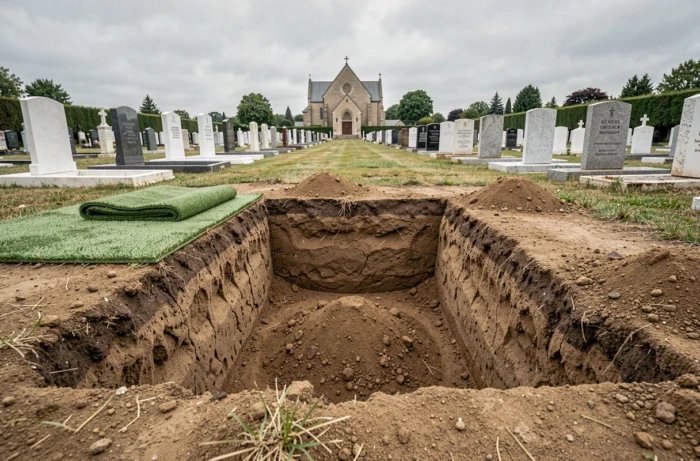
Reading a funeral estimate: common pitfalls on the digging line
The funeral estimate is a regulated document. The operator must provide an information notice detailing the services. In practice, the presentation varies from one provider to another, and some wording can be confusing.
Here are the points to check regarding the digging section:
- Does the estimate separately mention digging, filling, and the placement of the tombstone, or is everything grouped into a single package?
- If a “burial package” appears in addition to a “digging” line, ask whether these two lines accumulate or if one includes the other
- Are the costs for restoring the ground after filling (leveling, grassing) included or billed separately?
- Is the transport of the digging equipment to the cemetery listed as a specific line?
Requesting a detailed estimate from at least two companies remains the best leverage for comparison. The differences between providers for the same grave in the same cemetery can be significant. The competitive process is even more effective when you know precisely which lines to compare.
Anticipating the overall cost of a burial in the ground
Digging is just one element of the total cost. For a grave in the ground, the budget also includes the concession, the funeral monument (tombstone, stele, engravings), and maintenance over time.
The funeral monument often represents the largest portion. The choice of material (standard or premium granite), the number of engravings, and the complexity of the design significantly affect the bill. A standard granite with limited engravings substantially reduces the price of the monument.
Some families choose to delay the installation of the monument for a few months after the burial. This approach allows time to compare stonemasonry estimates without the pressure of the days following the death. The digging and filling, however, obviously cannot wait.
The cost of digging a grave is best examined in the context of the complete funeral budget, checking each line of the estimate rather than relying on a total amount. A question asked at the right time to the stonemason or funeral advisor can prevent duplicate billing that no one will spontaneously point out.