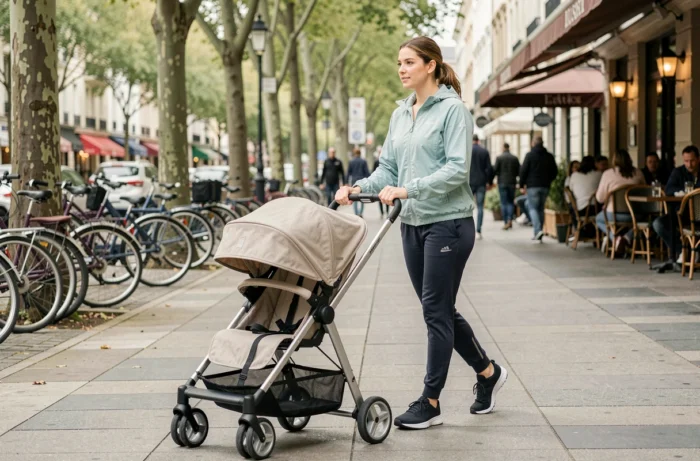
Exiting the subway with a baby snug against you, a stroller in one hand and a diaper bag in the other, is the real-world test that most bulky models fail. For a parent juggling transport trips, shopping, and park visits, the weight and bulk of the stroller dictate the smoothness of each day. Choosing a lightweight and stylish stroller means refusing to sacrifice practicality for design, or vice versa.
R129 Car Seat Compatibility and Compact Stroller: A Technical Point to Check Before Purchase
Since September 1, 2024, R44 car seats can no longer be sold new in the European Union. The R129 standard, which is based on the child’s height rather than weight, has become the norm. For an active parent transitioning from car to walking to bus, the compatibility between the R129 car seat and the stroller chassis must be verified before any purchase.
Travel systems are often sold as a cohesive set, but the regulatory reality is more nuanced. The compact stroller and the car seat are certified separately, with distinct weight or size limits. Just because a car seat clicks onto a chassis doesn’t mean they share the same capabilities.
An ultra-light chassis with a sleek look is worthless if it doesn’t accept a seat compliant with current regulations. Before falling for a color or fabric, check the list of compatible car seats provided by the manufacturer, and ensure they are marked R129. As PousBébé reminds us, the distinction between stroller and car seat remains fundamental, even in a combined pack.
A detailed comparison can be found on the lightweight stroller on Petits Bambins, which addresses this compatibility issue within the context of a recognized compact model.

Stroller Weight and Seat Capacity: The Two Numbers That Really Matter
European regulations now distinguish between strollers designed for a child up to 15 kg and those accepting a child from 15 to 22 kg. This is not a minor administrative detail. A lightweight model designed for a maximum of 15 kg will be outgrown well before the child turns three if they grow quickly.
We tend to focus on the weight of the stroller itself, looking for the lightest model possible. This makes sense when climbing stairs or storing it in a compact trunk. But the actual seat capacity deserves equal attention.
Finding the Right Balance Between Lightness and Robustness
A very light stroller with a thin chassis may vibrate on cobblestones or lack stability with a child approaching the weight limit. Feedback on this point varies depending on brands and the types of surfaces encountered. Ideally, test the stroller loaded (with a bag in the lower basket and the child seated) before finalizing your choice.
Here are the points to systematically check:
- The maximum seat capacity in kilograms, indicated on the technical sheet and not on the marketing packaging
- The weight of the folded stroller, which determines if it can be lifted with one hand in a staircase or bus
- The volume when folded, expressed in actual dimensions, to ensure it fits in the trunk or luggage compartment of a train
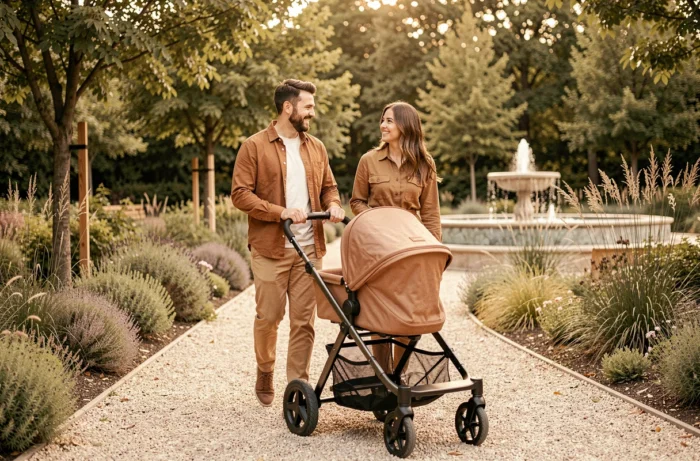
Stylish Stroller in the City: How Design Changes Daily Life
One might think that the style of a stroller is a luxury. In practice, design often dictates the quality of materials and finishes. A water-repellent fabric tightly stretched over an anodized aluminum frame does not react the same way as low-quality polyester on a painted steel chassis.
Brands that invest in aesthetics usually also pay attention to the ergonomics of the handle, the smoothness of the folding mechanism, and the quality of the wheels. This is not an absolute rule, but the correlation is frequent. A parent who chooses a well-designed model often ends up with a stroller that is more pleasant to handle, not just prettier to look at.
Colors, Fabrics, and Maintenance: Concrete Choices
A light fabric on a city stroller looks appealing in photos. In real life, between hands stained with applesauce and mud from parks, one quickly regrets it. Removable and machine-washable covers are an underestimated selection criterion for active parents.
The type of wheels also changes the overall look of the model. Solid EVA wheels give a sleek appearance and never puncture, but absorb less shock than inflatable wheels. For primarily urban use (sidewalks, shopping centers, public transport), solid wheels often represent the best compromise between style and practicality.
Lightweight Stroller and Public Transport: The Real Test of Daily Life
The most demanding terrain for a compact stroller is neither the forest path nor the beach. It’s the subway platform during rush hour. Narrow turnstiles, stairs without elevators, crowded cars: a stroller that folds in less than five seconds with one hand changes the game.
As PousBébé points out in its guide on using strollers in public transport, the question of compact folding is directly linked to safety. A poorly folded stroller that unfolds in a transfer corridor creates an obstacle for everyone.
Some models offer a so-called “umbrella” fold that stands on its own once folded. Others adopt a flat fold, more compact in volume but requiring to be leaned against a wall or wedged between legs. The choice depends on the frequency of public transport use and the layout of the stations you use daily.
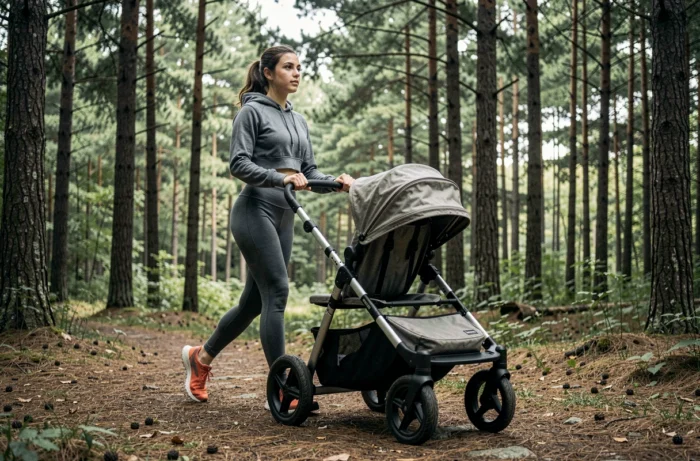
The last point to keep in mind is the actual duration of use. According to PousBébé, a child can stay in a stroller until they are three or four years old, but most lightweight and stylish models are optimized for the six months to three years range.
Checking the weight limit of the seat avoids having to buy a more robust model a few months after the initial purchase. The right reflex is to cross-reference the child’s current weight, their growth curve, and the capacity stated by the manufacturer.