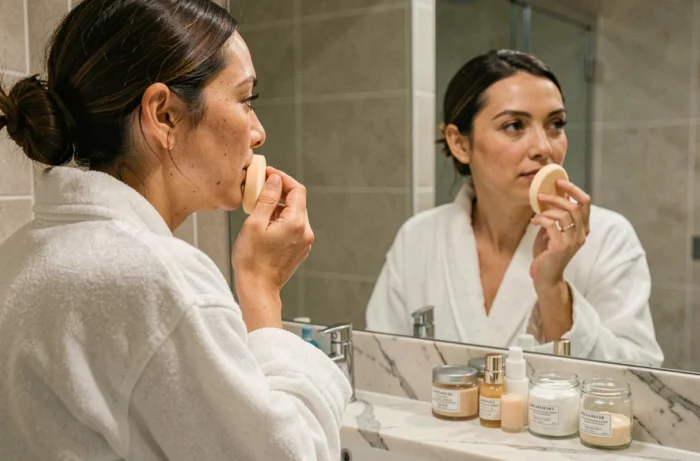
Facial makeup involves a series of technical steps, and their order and precision determine the final result. Beyond the choice of colors or brands, how long makeup lasts depends on factors that are often overlooked: the condition of the skin at the time of application, the freshness of the products used, and the cleanliness of the tools. These factors, rarely covered in mainstream tutorials, have as much impact on the quality of the finish as they do on skin safety.
Expired products and contaminated tools: the real risks to your skin
Makeup guides go into great detail about choosing foundation or creating a smoky eye. They rarely dwell on something that can make or break the result: the condition of the products you apply to your face.
The FDA notes that cosmetics intended for use around the eyes have a shorter shelf life than other products. Manufacturers generally recommend throwing away mascara after two to four months of use. Sharing mascara or rewetting it with water or saliva is not recommended, as these practices encourage bacterial growth around the eye’s mucous membranes.
This applies to your entire makeup bag. Foundation that has changed texture, lipstick with an unusual smell, or an eyeliner pencil that crumbles are all warning signs. Applying a product that has gone off to your face can cause irritation, allergic reactions, or infections, especially on sensitive areas such as the eyelids and lips.
If you’re looking to perfect your makeup with Cosmétiques Beauté, your first step should be to regularly sort through your makeup bag—well before working on your application technique.
- Brushes and sponges: washing them weekly with a gentle soap helps limit the buildup of oil, pigments, and bacteria that can affect the finish and irritate the skin.
- Powder puffs and foam applicators: replacing them frequently helps prevent the spread of germs, especially when using products near the eyes.
- Pump bottles: these protect the contents from oxidation and contamination better than open jars that you dip your fingers into.
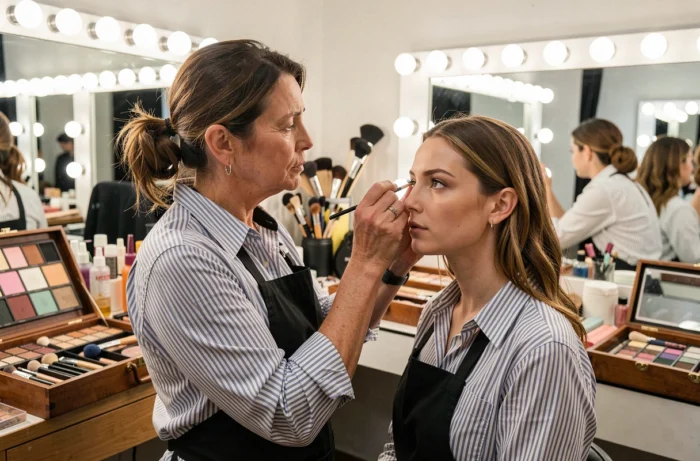
Preparing your face: what happens before the first brushstroke
Makeup that lasts all day starts with properly prepared skin. Cleansing removes oil and pollution residue that can prevent products from adhering. A moisturizer suited to your skin type (lightweight for combination to oily skin, richer for dry skin) creates a smooth surface that lets foundation blend in without catching.
What about sun protection?
The American Academy of Dermatology recommends applying a broad-spectrum sunscreen with SPF 30 or higher before makeup, and reapplying it every two hours when spending time outdoors. This step is often overlooked because some foundations display an SPF rating on their packaging.
This claim can create a false sense of adequate protection. To achieve the stated level of protection, you would need to apply an amount of foundation that is rarely used in practice. The SPF in a makeup product should therefore be treated as an extra layer of protection, not a substitute for applying dedicated sunscreen beforehand.
Complexion and eyes: two areas where precise application makes all the difference
Foundation application sets the tone for the rest of your makeup. Too much product can make your face look heavy, while too little leaves imperfections visible. For the most natural-looking result, apply small amounts to your forehead, cheeks, nose, and chin, then blend from the center of your face outward.
A damp sponge is still the most reliable tool for a skin-like finish with no visible lines. Pressed on in small dabs, it blends the product into the skin instead of moving it across the surface, as a flat brush can do when used too quickly.
Concealer and color corrector: order matters
Apply color corrector after foundation, not before. This order prevents the correction from being disturbed when you apply your base. Dab it under the eyes, around the sides of the nose, and over any remaining redness, then pat it in without dragging.
For eye makeup, apply pencil or eyeshadow to a mattified eyelid. A thin layer of loose powder or an eyeshadow primer keeps pigments from settling into creases throughout the day. Cream eyeshadows without a setting base crease in under two hours on most skin types.
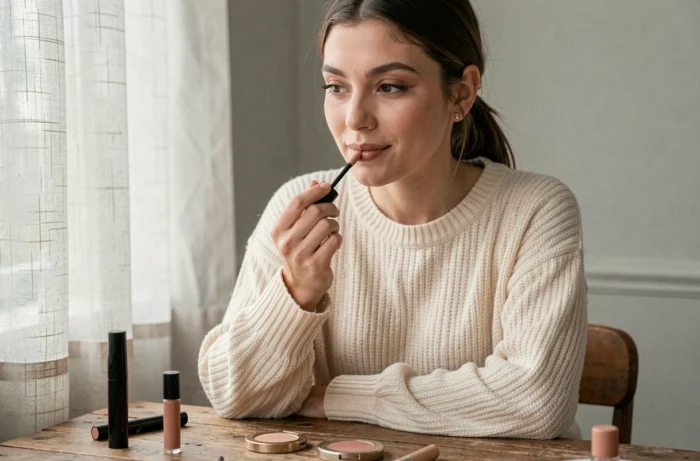
Powder, lips, and setting: finishing steps that are often rushed
Apply setting powder selectively. Applying it evenly all over your face can dry out areas that don’t need it, such as the cheekbones and eye area. A light dusting over the T-zone (forehead, nose, and chin) is enough to mattify your complexion without making it look cakey.
Lip makeup lasts longer with one simple step: line your lips with a lip pencil before applying lipstick or gloss. The pencil creates a barrier that keeps color from bleeding into the fine lines around your mouth.
- For a natural look: choose a pencil that matches your natural lip color, not your lipstick.
- For a more defined look: the pencil can be slightly darker than your lipstick; blend it inward.
- For longer wear: apply one coat of lipstick, blot with a tissue, then apply a second thin coat.
Mist setting spray from about 20 centimeters away at the end of your routine to help your makeup last longer. This final setting step can make the difference between makeup that lasts four hours and makeup that stays put all day.
Great makeup is about more than choosing the right color palette. Skin preparation, checking product expiration dates, and taking care of your tools are the invisible foundations of a visible result. Even perfectly blended foundation will lose much of its effect within a few hours if applied to poorly prepared skin or with a dirty brush.