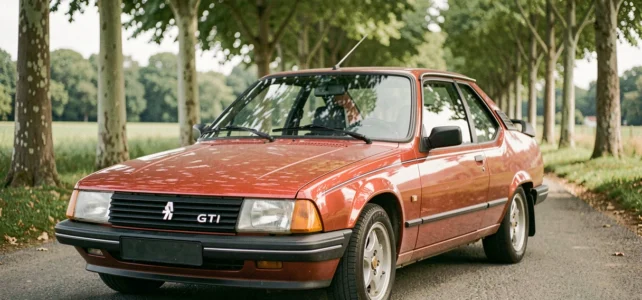
The Peugeot 305 GTI 16 has never appeared in the official catalog of the manufacturer from Sochaux. This model, a subject of recurring discussions among enthusiasts, lies at the border between an internal study prototype and a collector’s fantasy. Understanding what lies behind this name requires revisiting the technical foundation of the 305, the 16-valve engine that could have equipped it, and the current status of the 305 in the landscape of French automotive collecting.
The XU 16-Valve Engine and the Peugeot 305: A Real Technical Compatibility
The family of XU engines developed by PSA formed the mechanical basis for the entire generation of Peugeot 205, 305, 309, and 405 from the mid-1980s. The principle of this architecture was modularity: the same block could accommodate different cylinder heads, displacements, and fuel systems.
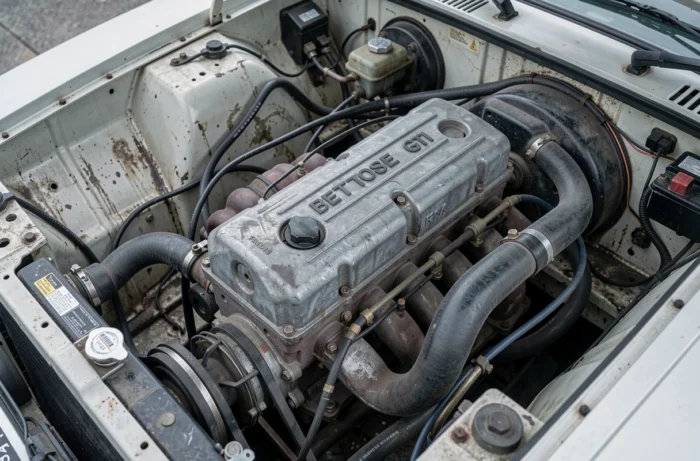
The 305 GTX, the most sporty version sold, was equipped with an XU9 engine from the 8-valve family. The transition to a 16-valve cylinder head, as implemented on the 205 GTI 1.9 in its most advanced version and then on the 309 GTI 16, was based on an architecture compatible with the engine compartment of the 305.
This mechanical compatibility has fueled projects by tuners and private builds for decades. Fitting an XU9J4 16-valve engine into a 305 is not a fiction: the engine bay physically accommodates the powertrain, with adaptations needed for electronic management and wiring. Several enthusiasts have documented this transplantation, which radically transforms the character of the sedan, exploring the secrets of the Peugeot 305 GTI 16 based on verified technical foundations.
Peugeot 305 GTX Against the Competition: The Sporting Positioning of a Forgotten Sedan
The 305 GTX occupied a particular niche in the 1980s. While the 205 GTI captured all the media attention with its lightweight and go-kart handling, the 305 offered the dimensions of a family sedan with a sufficiently lively engine to handle daily commutes.
Against the Renault 11 Turbo, Ford Escort XR3i, or Opel Kadett GTE of the same era, the 305 GTX relied on chassis balance rather than raw power. The independent rear suspension, inherited from engineering choices unique to Peugeot, gave it a healthier road behavior than several rivals with rigid axles.
The issue lay in the image. The 305 never benefited from a visible competition program, unlike the 205 Turbo 16, which made its mark in Group B rallying. Without a sporting record or aggressive marketing campaign, the GTX version remained in the shadows, even among Peugeot enthusiasts.
A Size That Attracted for Other Reasons
The sedan offered more living space than the 205, with a usable trunk and decent rear passenger space. For a driver seeking a compromise between driving pleasure and family use, the 305 GTX represented a rational choice.
This positioning also explains why surviving examples are rare: used as daily drivers, 305s were not well preserved. Many ended up in scrap yards without their owners ever imagining their potential value as collectibles.
Collector’s Registration and Taxation: What Changes for the Peugeot 305
The 305s, including the GTX versions and any potential “GTI 16” conversions, now qualify for collector vehicle status on the registration document. This status, reserved for models over thirty years old whose production has ceased and which are in original or near-original condition, significantly alters the framework for acquisition and ownership.
The concrete implications of this classification deserve detailing:
- The VAT on purchase is reduced to the rate applicable to art and collectible items, lowering the entry cost compared to a standard used vehicle.
- The capital gains tax regime upon resale differs from that of ordinary vehicles, with specific allowances related to the duration of ownership.
- The technical inspection follows a lighter schedule, with a five-year frequency instead of two for standard vehicles.
- Collector insurance, generally less expensive, becomes accessible, provided the usage criteria are met (limited mileage, closed garage).
This fiscal shift transforms the 305 into a tangible investment, at a time when French youngtimers from the 1980s are experiencing regular appreciation. The 205 GTI paved the way; the 305, less speculative, offers a more accessible entry ticket.
Finding and Maintaining a Peugeot 305 GTI 16: The Question of Parts
The main obstacle to any “GTI 16” project remains the supply of spare parts. While the XU engine benefits from relative abundance due to the massive production of the 205 and 309, body, upholstery, and specific running gear components for the 305 are becoming scarce.
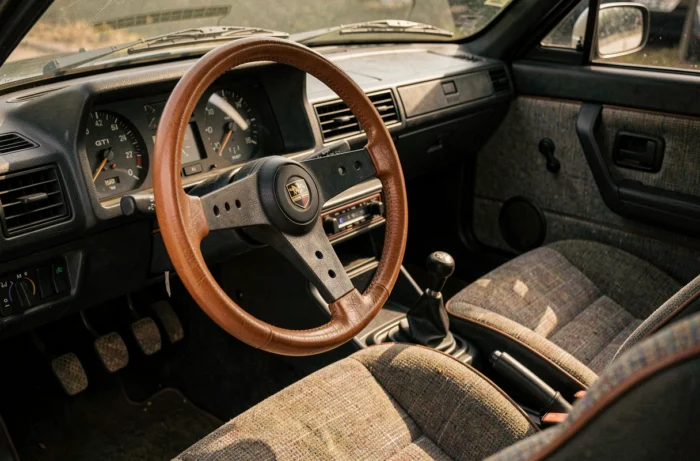
Specialized forums and enthusiast networks are the primary source. Some suspension or braking parts are shared with other PSA models from the same generation, making searches easier. However, interior trim elements specific to the GTX finish (sport seats, specific instrumentation) are becoming difficult to find.
Checks Before Purchasing a 305 Base
On a sedan of this age, structural corrosion points take precedence over mechanical condition. The chassis rails, wheel arches, and sills are the critical areas. A healthy chassis is worth more than a rebuilt engine, because an XU engine can be easily rebuilt, while a body rotted by rust condemns the project.
The authenticity of the vehicle also impacts future valuation. A complete original 305 GTX, even mechanically tired, sells better than a heavily modified example without documentation of the work done.
The Peugeot 305 GTI 16 remains an automotive object straddling the line between technical reality and catalog myth. Its mechanical base allows for conversion, its new fiscal status as a collector gives it heritage legitimacy, and the scarcity of preserved examples outlines a trajectory of appreciation that the 205 GTI has already traveled a decade earlier.