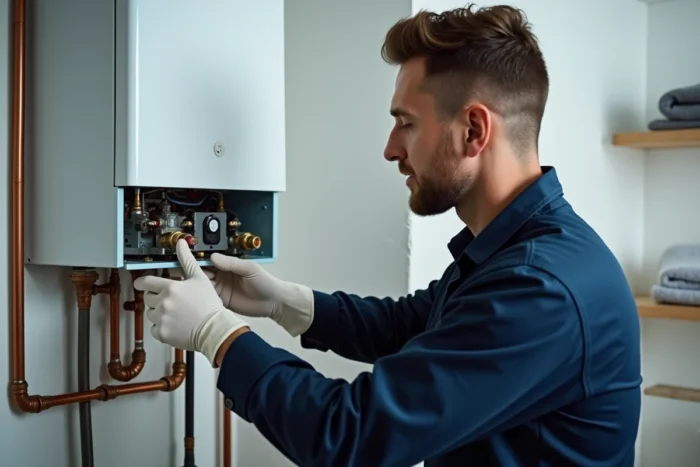
The replacement of a gas boiler refers to the removal of an existing appliance and the installation of a new heating system, whether it still operates on gas (condensation) or switches to another energy source (heat pump, biomass). This change involves several trades, requires administrative procedures, and depends on a regulatory timeline that has been tightening significantly since 2025.
VAT and gas regulatory timeline: what changes the actual cost of the project
Replacement guides discuss the price of the equipment and installation, but rarely the taxation that applies to the estimate. Since March 1, 2025, VAT on gas boilers has increased, which mechanically raises the cost of a like-for-like replacement compared to an estimate signed a few months earlier.
This tax increase is not negligible: on a project costing several thousand euros, the difference between a reduced rate and a higher rate amounts to hundreds of euros. Before validating an estimate, check the VAT rate applied and compare it with the rate that would apply to a heat pump or biomass boiler.
The timeline will tighten further. Starting from September 1, 2026, any significant renovation in a single-family home that retains a gas boiler as the main system will lose eligibility for MaPrimeRénov’ accompanied pathway. If your project combines insulation and heating change, keeping gas will deprive you of major state aid. Knowing how to change a gas boiler in this new fiscal and regulatory context directly affects the profitability of the operation.
Moreover, from building permits filed on January 1, 2027, any gas installation will be prohibited in new constructions, including as a backup for a heat pump. The coverage of gas connections by the network will also cease for new projects: the cost of connection will be entirely borne by the applicant.
Technical diagnosis before boiler replacement: points to check
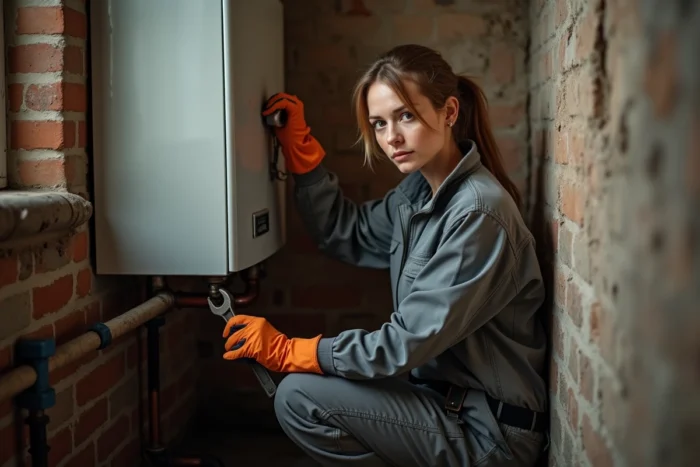
Changing a boiler without diagnosing the existing installation is like putting a new engine on a rusty chassis. The preliminary diagnosis determines not only the type of compatible appliance but also the additional work to budget.
Condition of the hydraulic network and emitters
Radiators, underfloor heating, and pipes must withstand the temperature regime of the new appliance. An air-water heat pump, for example, operates with low-temperature water. If your radiators are sized for high-temperature water, their efficiency will drop, or they will need to be replaced.
A flushing of the heating circuit is often necessary before installing new equipment. Sludge accumulated in the pipes reduces performance and accelerates the wear of the new boiler or heat pump.
Flue gas evacuation and ventilation
The type of outlet (flue, chimney duct) conditions the choice of the new appliance. A condensing boiler with a flue does not require a vertical duct, which simplifies installation in homes without a chimney. However, switching from a chimney duct to a flue outlet requires sealing the old duct and drilling a facade, with prior declaration in a co-ownership.
Three checks to be carried out before signing an estimate:
- The thermal sizing of the home (heat losses, surface area, altitude) to choose the right power without oversizing
- The condition of the existing flue duct or the feasibility of a flue outlet on the facade
- The electrical compatibility of the panel, especially if the replacement leans towards a heat pump that consumes more amperage than a gas boiler
Gas condensing boiler or air-water heat pump: decide based on the home
The choice between these two options is not just a comparison of catalog prices. It depends on physical constraints specific to the home.
The gas condensing boiler remains relevant in certain specific cases: a home already connected to city gas, high-temperature radiators that the budget does not allow to replace, a co-ownership where the installation of an outdoor heat pump unit is refused by the property manager. Its efficiency exceeds that of older low-temperature boilers, and installation is quick as it reuses the existing circuit.
The air-water heat pump becomes the dominant choice in single-family homes with sufficient land for the outdoor module. It divides primary energy consumption by a significant factor thanks to its coefficient of performance. It also opens access to the most generous aids (MaPrimeRénov’, CEE bonuses).
Two limits to anticipate for the heat pump:
- The noise level of the outdoor unit, subject to neighborhood regulations. A poorly chosen location can generate conflict or impose costly relocation after installation
- Performance in very cold climates: below certain outdoor temperatures, the air-water heat pump loses efficiency and an electric backup takes over, which increases the bill
Financial aid for gas boiler replacement in 2026
The aid system is evolving rapidly, and the window for subsidized replacement is narrowing for those who wish to remain on gas.
MaPrimeRénov’ finances the transition to a heat pump or biomass boiler, not the replacement of a gas boiler with another gas boiler. The amount of the grant depends on the household’s income and the type of equipment installed. CEE bonuses (energy savings certificates) come as a complement and are cumulative.
For households with modest incomes, the remaining cost after combining aids can drop significantly, making the air-water heat pump competitive from the first year compared to keeping an aging gas boiler. The accompanied pathway, which includes an energy audit and support from an approved operator, grants access to the highest amounts, but it will exclude projects retaining gas starting in September 2026.
Obtaining at least two detailed estimates from certified RGE (Recognized Guarantor of the Environment) installers is a condition of eligibility. This certification is not a mere formality: without it, no public aid will be granted, regardless of the equipment chosen.
The replacement of a gas boiler is less about the choice of equipment than about the timeline. Each passing quarter brings closer regulatory deadlines that reduce options and available funding for those who want to stay on gas.