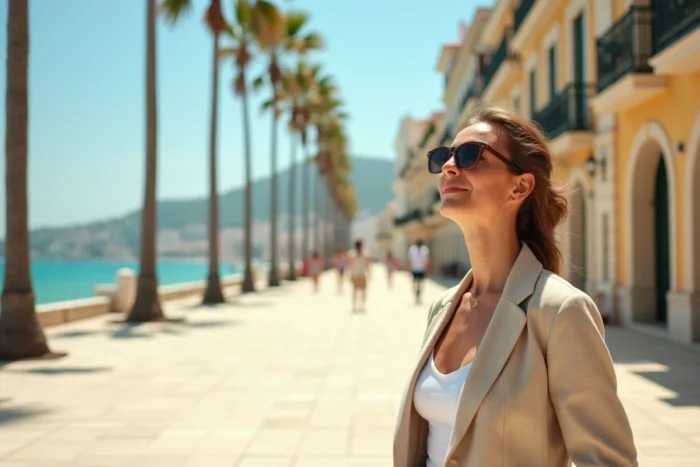
When you arrive in Sète for the first time looking for the sets of Tomorrow Is Ours, the reality on the ground is surprising. Some buildings seen on screen are private facades, others are used only for exterior shots, and the studios where most of the scenes are filmed remain closed to the public. It’s better to know what to expect before planning a day of scouting in the city.
Real sets and studio sets in Sète: what can be seen or not
The series uses a mix of real locations and recreated sets. The interiors of the police station, the hospital, or the apartments are filmed in a studio, on a surface that includes more than fifteen sets. In the city, only the exterior facades are accessible during a self-guided visit.
Chloé Delcourt’s house, for example, does exist in Sète. You can see it from the street. However, the interior has nothing to do with what is shown on screen, as it is entirely recreated in the studio. The same logic applies to the courthouse, whose exterior and interior shots use the building of the regional office of Crédit Maritime Mutuel, located at 187 quai d’Orient.
The Beddiar house, on the other hand, is only used for illustrative images. Some addresses are private properties, with no signage or visitor access. Sometimes you find yourself in front of a closed gate, camera in hand, with nothing particular to photograph. This is a detail that traditional tourist guides rarely mention.
To complement this scouting, a detailed overview of the filming locations of Tomorrow Is Ours clearly distinguishes what can be visited from what remains inaccessible.
Filming of DNA outside of Sète: Saint-Guilhem-le-Désert and the Hérault coast
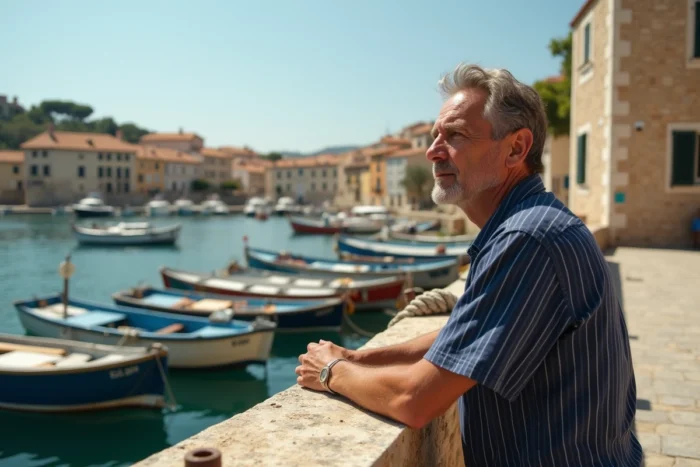
Sète remains the geographical heart of the series, but the filming now extends beyond the city. TF1 has used Saint-Guilhem-le-Désert as a new backdrop for certain sequences, a classified village located in the gorges of the Hérault, about an hour’s drive from Sète.
Other sequences have been filmed around Grau-du-Roi and Port Camargue, on the Gard coast. These excursions expand the geography of the series beyond the Thau basin. For visitors, this means that a complete tour of the filming locations is not limited to a single city.
Preparing an itinerary across multiple sites
If you plan to combine Sète, Saint-Guilhem-le-Désert, and Grau-du-Roi, you should allow at least two days. The distances between these points are not huge, but the roads in the Hérault hinterland are winding. Grouping the Sète visits into one day and dedicating a second day to the outdoor sites remains the most realistic organization.
- Sète center: docks, Sadi Carnot bridge, courthouse facade, Haut district for the shared apartment
- Plage des Trois Digues (between Sète and Marseillan-Plage): location of the Spoon beach hut, used for the exterior views of the bar
- Saint-Guilhem-le-Désert: occasional set, medieval village classified as a UNESCO World Heritage site
- Le Grau-du-Roi and Port Camargue: coastal areas used for some recent scenes
Guided boat tours: the Cine Tour of filming locations
Since 2023, boat tours have been organized in Sète to navigate the canals and the Thau pond while following the sets of the series. These trips, lasting about an hour, are led by a guide actress who shares filming anecdotes and local history related to each location.
More than 60 visitors board each outing, which gives an idea of the popularity of the format. Feedback varies on this point: some find the boat too crowded to see the facades well, while others enjoy the collective atmosphere. The route covers angles inaccessible on foot, particularly the views from the canals on the docks used in the series.
Self-guided visit or organized visit
The self-guided visit remains possible and free. You can spot the main addresses while strolling along the docks and in the Haut district. The advantage of the Cine Tour is the commentary and the perspective from the water. The downside is the group format.
- Self-guided visit: flexible, free, but without context or production anecdotes
- Cine Tour by boat: narrated, structured route, but limited to one hour and dependent on the weather
- Walking tour with map: a compromise between autonomy and scouting, by downloading an itinerary before departure
Impact of the series on tourism in Sète
The daily airing of Tomorrow Is Ours, followed by several million viewers, has transformed the tourist attendance in Sète. The series has become a vehicle for discovering the city for an audience that might not have considered this destination.
Local merchants in the center and along the docks have seen a new clientele, guided by the sets of the series. Local accommodations are now positioning themselves in this niche, offering lodging close to the filming locations.
The guide of the Cine Tour sums up the dynamic well: beyond fiction, the series also tells a real story of Sète, its canals, its port, its relationship with the Mediterranean. For visitors, the filming serves as a gateway to Sète’s heritage, not just to the television plots.
Sète takes advantage of this visibility with a tourist offer that adapts season after season. Whether coming to recognize a facade seen on screen or to discover the Thau basin at the same time, the detour deserves to be planned with a minimum of prior scouting, if only to avoid finding oneself in front of a closed door.