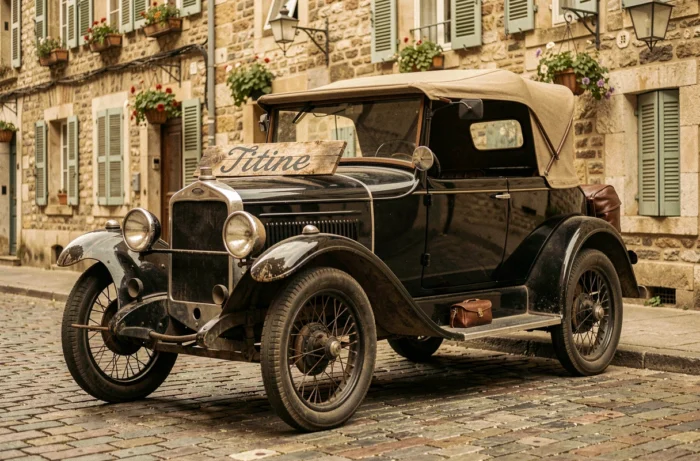
You have probably heard someone say “Come on, Titine, start!” while turning the ignition key. This nickname has been part of conversations for generations, without anyone really questioning where it comes from. The nickname Titine for a car is part of the familiar French vocabulary, but its history goes back long before the automobile itself.
How an Affectionate Word Becomes a Linguistic Mechanism
To understand Titine, we first need to look closely at the word. It belongs to a well-identified family in French: hypocoristics, these affectionate diminutives made from a first name. The principle is simple: you shorten a first name, double a syllable or modify it, and you get a sweet little name.
Thus, Titine can derive from Christine, Martine, Clémentine, or Ernestine. The syllable “Ti” is doubled in “Ti-tine,” giving the word a childlike sound. This type of formation is common in French: it can be found in many shortened everyday first names.
What distinguishes Titine is that its exact etymology remains undetermined. Several original names coexist, without one prevailing. The word was already circulating as an affectionate term long before it became fixed on a specific object. It is precisely this ambiguity that has allowed it to shift from one usage to another over time.
If you are wondering why a car is called Titine, the answer intertwines linguistics and French cultural history.
Titine in Early Twentieth Century French Song
It was popular music that tipped the word. Titine appears in songs from the early twentieth century, always in a light, familiar, almost conspiratorial tone.
The song “Je cherche après Titine” particularly marked people’s minds. Charlie Chaplin covered it in Modern Times (1936), delivering an absurd and comedic version of the piece. This moment remains one of the most famous scenes in the film.
These songs have embedded Titine in collective memory. The word no longer referred to a specific person. It evoked something familiar, close. The ground was prepared for it to slide toward another object of affection.
From Affectionate Name to Car Nickname in France
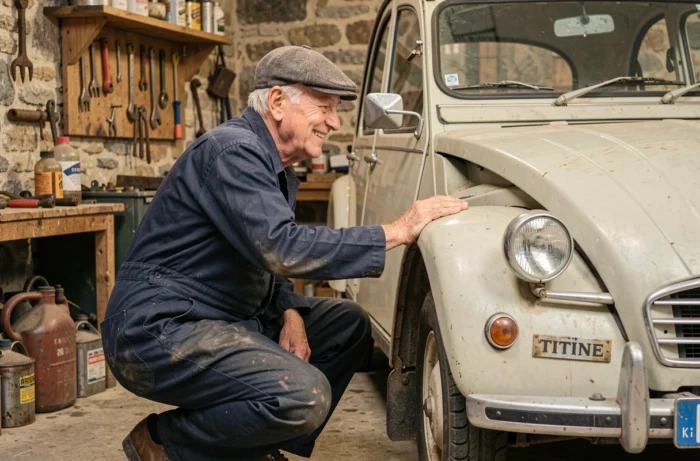
Have you ever noticed that the French readily give names to their everyday objects? The car holds a special place in this habit. It accompanies its owner every day, sometimes for many years. It breaks down, restarts, ages with you.
Transferring a human name to an object we care about follows a classic logic in linguistics. Titine, already charged with affection from the song and family usage, naturally settled on the car. Its soft sound, feminine character, and familiarity made it an ideal candidate.
This shift occurred over several decades. The automobile transitioned from a luxury reserved for a few privileged individuals to a road companion present in most households. The more familiar the car became, the more it called for a little name.
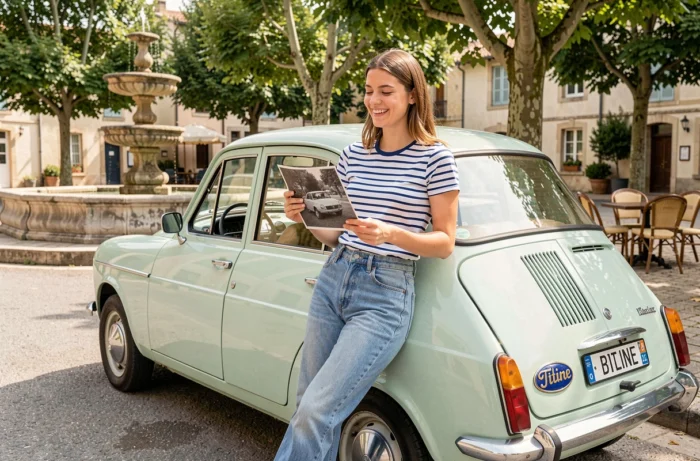
Several reasons explain why Titine has endured over time:
- The word is short, easy to pronounce, and immediately understood by all French speakers, regardless of their age or region
- It carries an emotional weight inherited from popular song, giving it a cultural depth that more recent nicknames lack
- It works for any model, from a Citroën 2CV to a Renault Clio, because it does not describe the car but the relationship one has with it
Car Nickname: A Practice That Goes Beyond Titine
Titine is not alone. Surveys conducted by automotive media reveal that other little names circulate among French motorists: Choupette, Ma Belle, Bibiche, or even classic human names. Naming one’s car reflects a psychological attachment to an object used daily.
This behavior also exists elsewhere. In the English-speaking world, naming one’s vehicle is common. The French specificity lies in the existence of a generic term. One does not say “my Titine” thinking of a specific name. The word is used as an affectionate synonym for “car.”
Titine has crossed the boundary between proper noun and common noun. It is this shift that makes it unique in the French automotive vocabulary. An English person may call their car Betty or Betsy, but none of these names have acquired the status of a generic term recognized by all.
Why This Nickname Endures Over Time
Linguistic fashions come and go. Expressions from one generation often disappear with it. Yet Titine, born in the early twentieth century, continues to circulate in conversations.
Its longevity rests on a precise mechanism. The word is passed down between generations effortlessly, often through family mimicry. A grandparent saying “Titine” in front of their grandchildren bequeaths the term without even thinking about it. Popular culture (films, songs, advertisements) also regularly reactivates the nickname.
The French relationship with the automobile remains strong despite market evolutions. Whether the car is thermal, hybrid, or electric, the need to personalize an object used every day does not weaken. Titine adapts because it describes neither a technology nor an era, but an emotional bond.
The day autonomous cars drive without a driver, the question will arise: will their passengers continue to call them Titine? The nickname has survived over a century of automotive changes. Nothing suggests it won’t survive the next one.