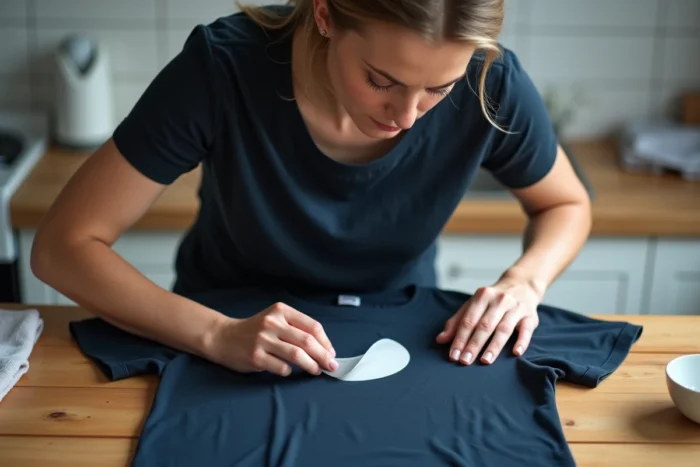
Textile flocking relies on a heat-activated adhesive film (vinyl, flex, or flock) fixed to the fabric. Removing this marking without damaging the fibers requires understanding how this adhesive reacts to heat, solvents, and mechanical stress. Not all techniques apply to all types of flocking, and the fabric itself dictates the limits of each method.
Heat-activated flocking, ink, sublimation: why the method depends on the marking
Before heating or rubbing anything, identifying the type of marking saves time and prevents damage to the garment. A heat-activated vinyl flocking (HTV) forms a raised film that can be lifted once the adhesive softens. A sublimation marking, on the other hand, is an ink that has penetrated the fiber: no iron will remove it.
The visual distinction is simple. If you run your finger over the design and feel a distinct thickness, a sharp edge, you are dealing with vinyl or flex. If the design appears printed directly onto the fabric, without relief, it is likely sublimation or direct screen printing. In this second case, only a suitable solvent can reduce the marking, and complete removal is rarely guaranteed.
To find out how to reliably remove flocking from a garment, this prior identification of the marking is the first step.
Removing flocking with an iron: step-by-step temperature adjustment and protective paper
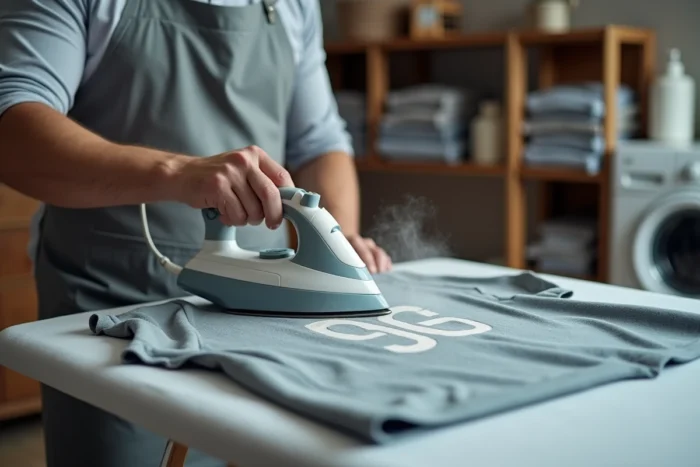
Heat remains the most common method for removing heat-activated flocking. The principle: soften the adhesive to detach the film without pulling out the fabric fibers. The classic trap is to raise the temperature too high, too quickly, which can gloss the textile or distort synthetic fibers.
Step-by-step temperature progression
Set the iron to a moderate temperature (cotton setting or slightly below). Place a sheet of parchment paper or a thin cloth between the iron’s soleplate and the flocking. Press for a few seconds, then lift the paper to check if the edge of the design starts to lift.
If nothing moves, increase the temperature slightly and repeat. Working in stages protects the fabric from burns and allows you to adapt to the sensitivity of each textile. Sports jerseys made of polyester, for example, can tolerate much less heat than thick cotton.
Gradual peeling with tweezers
As soon as a corner of the flocking lifts, use tweezers or a small seam ripper to slowly pull the film. The motion should remain parallel to the fabric, never perpendicular, to avoid stretching or tearing the area. If resistance returns, iron for a few more seconds before resuming the pull.
Heat-free alternatives: solvents and white vinegar
Some garments do not tolerate direct heat. Technical fabrics, workwear with water-repellent treatment, or fragile blended textiles require a chemical approach rather than a thermal one.
Pre-test on a hidden area of the fabric
Whatever product you choose, apply it first to an inconspicuous area (inner hem, side seam). Wait a few minutes and check for any discoloration or alteration of the fiber. This precaution applies to acetone, white spirit, and even white vinegar.
Which products to use and in what order
- Warm white vinegar: soak a cloth and dab the flocked area for several minutes. The vinegar softens certain adhesives without damaging most natural fibers. Then gently scrape with a plastic spatula.
- Acetone (oil-free solvent): effective on stubborn adhesives, but to be avoided on synthetic fabrics that it can dissolve. Apply with a cotton swab on residues after an initial pass with the iron.
- White spirit: reserved for cases where other methods have failed. It degrades certain dyes, hence the prior test on a hidden area.
The recommended order goes from least aggressive to most aggressive. Always start with heat or vinegar before moving on to petroleum solvents.
Adhesive residue after removal: clean the area without marking the fabric
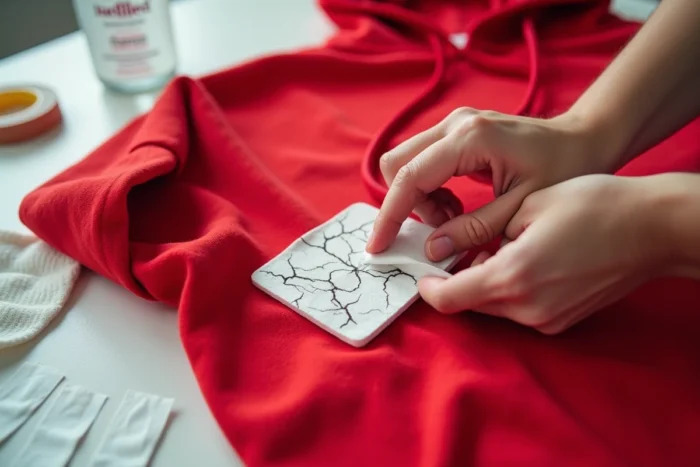
The flocking is gone, but a film of adhesive often remains visible, especially in low light. This residue feels sticky and attracts dust. Leaving it in place spoils the result.
A pass with an iron on absorbent paper softens and transfers the residual adhesive. Place a clean sheet of parchment paper over the area, iron at a moderate temperature. The melted adhesive migrates into the paper. Repeat with a new sheet until the transfer stops.
For stubborn residues, a pad soaked in isopropyl alcohol rubbed lightly yields good results on cotton and polyester. Then wash the garment at the usual temperature to remove any trace of the product.
Common mistakes that damage the fabric during flocking removal
Failures rarely come from the wrong method, but from poor execution. Three mistakes account for the majority of damage.
- Heating too long in the same spot: the fiber burns, the fabric glosses or warps irreversibly. Short presses of a few seconds are better than prolonged pressure.
- Pulling the flocking cold: without prior softening of the adhesive, pulling tears the surface fibers and leaves a visible halo.
- Using acetone on polyester or elastane: acetone dissolves these synthetic fibers and creates a hole or a rigid, brittle area.
Patience remains the key factor. A well-done flocking removal takes between ten and thirty minutes depending on the area. Reducing this time by forcing heat or mechanical traction almost always leads to a marked garment.
If the flocking resists after two complete attempts, consulting a textile marking professional remains the safest solution to preserve the garment. The cost of professional flock removal is much lower than replacing a cherished piece.