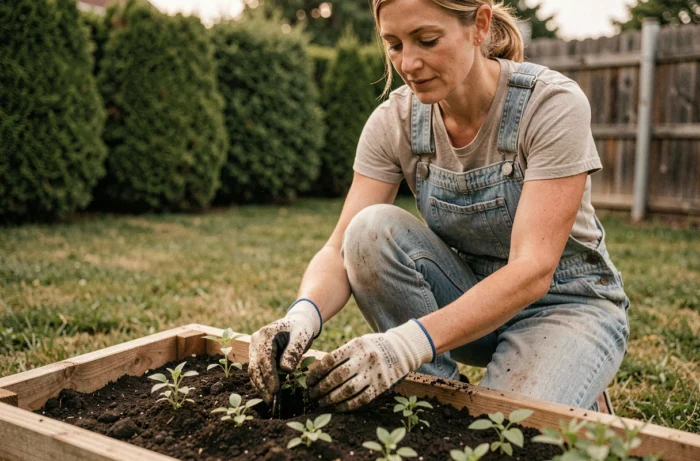
A well-functioning garden relies less on the choice of plants than on how the land manages water, light, and local regulatory constraints. Before thinking about the colors of flower beds or patio furniture, it’s essential to understand what the soil and land registry allow. It is from this concrete data that the layout of your garden takes shape sustainably.
Rainwater Infiltration: The Parameter Most Garden Plans Ignore
You may have noticed that some areas of your land remain waterlogged after a downpour, while others dry out within hours? This difference reveals the infiltration capacity of your soil, and it is this that should guide the layout of your paths, flower beds, and mineral surfaces.
Recent urban renaturation projects prioritize rain gardens and permeable surfaces. The idea is simple: let the water infiltrate as close to its point of fall as possible rather than channeling it into a drainage system. This principle also applies to a domestic garden.
In practical terms, this means limiting paved surfaces and concrete areas to the strict minimum. Favor gravel, Japanese stepping stones placed on a sand bed, or grassed joint pavers. These choices reduce runoff, retain soil moisture in summer, and mitigate heat spikes at ground level. To delve deeper into these landscaping principles, the useful resources from Conseil Jardin cover numerous land configurations.
A technical point to remember: permeable soil and ecologically functional soil are not the same thing. French regulations distinguish between impermeabilization (surfaces preventing infiltration) and artificialization (deep modification of the soil). Gravel laid on a geotextile allows water to pass through, but it does not restore the biological life of the soil. If you want a truly vibrant garden, keep areas of bare soil without any intermediate layer.
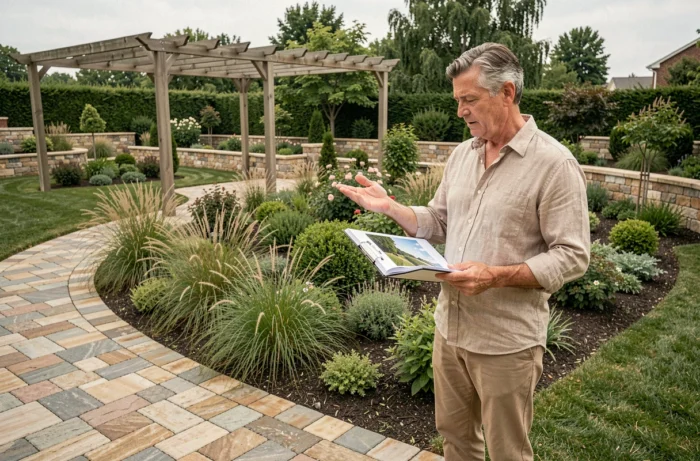
Fences and Fixed Installations: Check the PLU Before Starting
Installing a fence, a low wall, or a gate may seem trivial. According to the Urban Planning Code, a fence is not systematically subject to formalities. However, the municipal council may impose a prior declaration of works, particularly in protected areas around historical monuments.
Maximum height, permitted materials, imposed colors: the Local Urban Plan (PLU) of your municipality sets these parameters. A neighbor who has installed a two-meter-high fence without verification may be required to bring it into compliance, with the dismantling costs at their expense.
What the PLU Regulates in a Garden
- The height and materials of fences, retaining walls, and gates, including hedges beyond a certain height
- The footprint of garden sheds, pergolas, and covered terraces, which may require a prior declaration or a building permit depending on their size
- The coefficient of bare soil, which requires maintaining a minimum percentage of non-impermeabilized surface on the plot
Before purchasing materials, consult the urban planning department of your town hall. A phone call is usually sufficient to obtain the applicable constraints for your plot.
Perennials vs. Annuals: Reducing Maintenance from the Design Stage
A case study conducted in Caluire shows that reducing water consumption starts with a change in plants. Fewer annuals (petunias, impatiens, geraniums) and more perennials (lavender, gaura, yarrow) have allowed for a significant reduction in summer watering.
Why this difference? An annual completes its cycle in one season. It grows quickly, flowers abundantly, but its root system remains shallow. It needs water frequently. A perennial, on the other hand, develops deep roots over the years. After two or three seasons of establishment, most Mediterranean or continental perennials rely on natural precipitation.
Planting Strategy for a Water-Efficient Garden
Group plants by water needs. Areas close to the house, often watered more, should host the most demanding species. Distant flower beds should receive drought-resistant perennials. This zoning prevents wasting water on plants that do not need it.
Mulching complements this logic: a sufficiently thick layer of wood chips or straw limits evaporation, slows down weeds, and nourishes the soil as it decomposes. It is one of the most cost-effective actions in terms of time saved on annual maintenance.

Structuring Living Spaces Before Choosing Plants
The classic temptation is to buy plants at a garden center and then look for where to plant them. The reverse approach yields better results: first define the usage areas, then dress them with suitable plants.
Identify the functions your garden needs to fulfill. A dining area near the kitchen, a play space visible from the house, a composting area that is accessible yet discreet. Sketch these areas on a simple plan, even freehand on graph paper.
Then outline the logical pathways between these spaces. A path that is too narrow will be bypassed by the lawn, creating unsightly dirt paths. Allow at least 80 centimeters in width for regular passage, more if you need to pass through with a wheelbarrow.
Plants come last. They serve to delineate areas (low hedge, grasses), create shade (deciduous tree on the south side), or obscure a view (evergreen shrubs). Each plant fulfills a specific function in the plan. A plant without a defined role often ends up poorly placed or poorly maintained.
The layout of a lasting garden starts with the soil, goes through local regulations, and is realized through plant choices that are coherent with the land. The most costly mistakes do not stem from a poor choice of flower color, but from a terrace that channels runoff towards the house or a fence that does not comply with the PLU.