When opening a wardrobe as autumn-winter 2026 approaches, the usual reflex is to identify missing pieces. This season’s fashion trends challenge that reflex: the question is no longer just what to wear, but how to buy and under what conditions the clothes reach us.
European Regulation on Unsold Textiles: What Changes for Collections
Since the gradual entry into force of the ESPR (Ecodesign for Sustainable Products Regulation), the destruction of unsold clothing is now prohibited in the European Union. Brands must prioritize resale, donation, repair, refurbishment, or reuse before considering recycling. In practice, this means that end-of-collection items no longer quietly disappear into incinerators.
For us consumers, the consequences are direct. The volumes produced per collection tend to decrease, which alters the availability of certain pieces mid-season. Sale periods may also evolve: when a retailer can no longer clear its stock through destruction, it has an incentive to better calibrate its orders from the start.
France goes even further with its anti-fast fashion law, which specifically targets ultra-fast fashion platforms. We closely follow these developments on the fashion section of Le Tour de la Question, where the concrete impacts of these regulations on wardrobes are regularly documented.
Autumn-Winter 2026 Trends: Brown and Ecru Replace Black
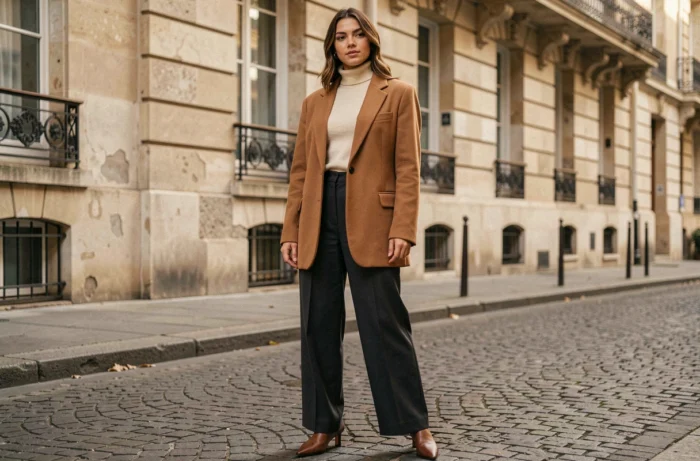
In terms of palette, two colors dominate this season with unusual clarity. Brown emerges as the main alternative to black, ranging from deep chocolate to cappuccino and mocha. It’s a shade that works well on both a structured coat and thick knit trousers.
Ecru, on the other hand, establishes itself as the key color of 2026. Symbolizing understated luxury, it highlights natural materials (wool, linen, cashmere) and brings a welcome brightness to the dark months. It can be found on oversized sweaters, midi skirts, and short jackets.
How to Incorporate These Shades Without Redoing Your Entire Wardrobe
No need to buy everything new. Just one brown top worn with raw denim changes the tone of an entire outfit. Ecru works well in layering: an ecru turtleneck under a dark jacket is enough to capture the trend without effort.
Opinions vary on the maintenance of ecru in daily life, especially in urban environments. Having a fabric stain remover on hand remains a useful reflex if adopting this shade on frequently worn pieces.
Coordinated Sets and Loungewear: The Pieces Making the Most Progress
The Fashion, Rewired report published by Faire in September 2026 documents a clear trend among independent retailers: orders for loungewear and coordinated sets are increasing significantly. We’re no longer just talking about joggers: coordinated sets (top + bottom in the same fabric, the same color) are establishing themselves as a distinct category.
This movement is fueled by TikTok micro-trends. The same report notes, for example, the customization of sweatshirts with iron-on patches, which transforms a basic piece into a unique item. It’s a practical, low-cost use, explaining why loungewear is not declining despite the return to the office.
- Ribbed knit sets (cardigan + matching trousers) work well both indoors and outdoors with a coat over them
- Customized sweatshirts with patches or embroidery allow for personalizing a standard piece without any particular sewing skills
- Thick cotton coordinates are gradually replacing classic tracksuits in orders from independent shops
Omnichannel Shopping Journey: The Invisible Fashion Trend That Matters Most
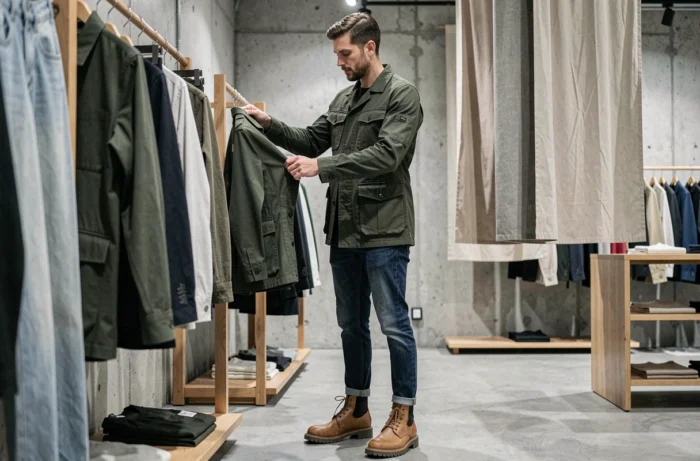
The Fashion Consumer Trends Report published by ACI Worldwide in September 2026 shifts the focus. The notion of fashion trend is no longer limited to clothing; it includes how we buy it. The shopping journey is becoming strongly omnichannel: we spot items online, try them in-store, order from our phones, and return to a pickup point.
This is not a logistical detail. When a brand offers a seamless journey across its channels, it captures purchases that its competitors lose due to friction. For consumers, this means that brands investing in this experience often provide better after-sales service, simplified returns, and more reliable size availability.
British Tailoring and Layering: The Cuts of the Season
British-inspired tailoring returns with structured shoulder cuts and fabrics featuring checks or fine stripes. It can be found in both high-end houses and mid-range collections. Layering defines the autumn-winter 2026 silhouettes: shirt under sweater, short jacket over midi dress, vest over a turtleneck.
These layers are not just aesthetic. They respond to a practical constraint: the temperature differences between overheated interiors and cold exteriors make removable layers more functional than a single thick coat.
- The short colored jacket worn open over a coordinated set nicely summarizes the crossover between loungewear and tailoring
- The barrel jean (wide at the hips, tapered at the ankle) remains a strong silhouette, to be paired with structured materials on top
- The short trench replaces the classic trench for body types seeking a less enveloping effect
This season is not just a list of colors or cuts. The European regulation on unsold goods, the acceleration of micro-trends through social media, and the evolution of the shopping journey redefine what “following fashion” concretely means. Adapting one’s style involves both choosing a chocolate brown jacket and deciding how to purchase it.