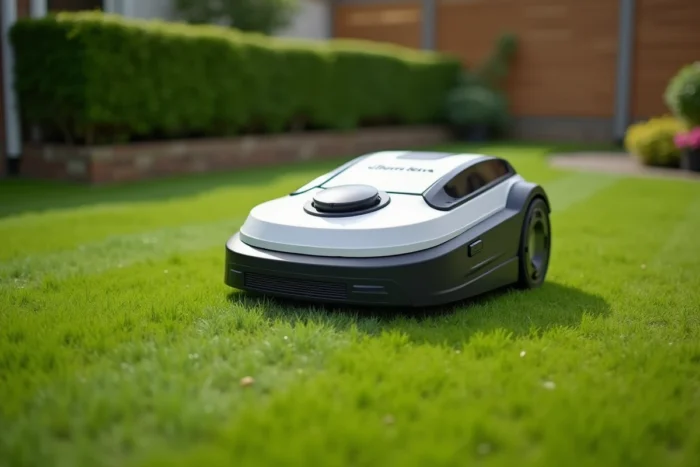
The Gardena Sileno range now covers areas from approximately 250 to 1,500 m², with classic wired models and, since 2025-2026, two new wireless lines (Sileno Free and Sileno Sense). Between the accessible pricing inherited from the Husqvarna group and the technological promises of the recent versions, the performance gaps deserve factual examination.
Wired or Wireless Sileno Range: Comparative Table of Technologies
Gardena now offers three distinct navigation approaches within the Sileno range. The choice between them affects the budget, installation complexity, and long-term reliability.
| Criterion | Sileno Minimo / Life (wired) | Sileno Free (GPS) | Sileno Sense (AI vision LONA) |
|---|---|---|---|
| Installation | Buried perimeter wire | GPS mapping, no wire | Reference antenna + satellite + LONA, no wire |
| Zone Management | Zones defined by the wire | Virtual zones via app | Virtual zones + obstacle detection via camera |
| Covered Area | Up to 1,500 m² | Up to 800 m² | Up to 600 m² |
| Connectivity | Bluetooth (Minimo) or Wi-Fi (Life) | Wi-Fi + GPS | Wi-Fi + GPS + built-in camera |
| Risk of Broken Wire | Yes (spade, scarification) | No | No |
The wired models remain the most proven. The wireless versions eliminate the constraint of the perimeter wire, but field reports indicate early bugs with the Free 800. The Sileno Sense, launched in 2026, relies on LONA technology combined with a camera: the promise of intelligent mowing, with a commissioning process that can take much longer than the ten minutes announced by Gardena.
To cross-reference this data with detailed user feedback, our review of the Gardena Sileno robotic mower delves into each model.
Battery Life and Aging After Several Seasons
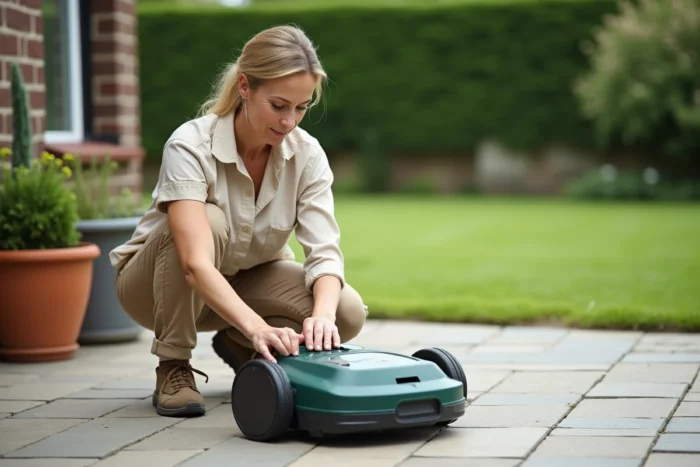
The initial battery life of a robotic mower tells only part of the story. User testimonials published on the brand’s social media and specialized forums point to a recurring issue: battery aging reduces autonomy after several seasons. This observation particularly concerns older Sileno and Smart Sileno models.
On a sloped terrain or an area close to the upper limit of the model, capacity loss becomes noticeable as early as the second or third year. The robot makes multiple returns to the charging station, which extends the total mowing time and can leave uneven areas.
- Monitor the complete cycle time each season to detect a decrease in capacity
- Plan for battery replacement in the overall budget (the cost varies by model, but it represents a significant portion of the purchase price)
- Choose a model whose recommended area exceeds the actual garden size, to limit battery strain
This last point is often underestimated. A Sileno calibrated to its nominal capacity will operate at full load continuously, accelerating battery wear.
Noise of the Robotic Mower and Local Regulatory Constraints
Gardena robotic mowers are significantly quieter than a gas mower. This relative discretion does not exempt from complying with municipal regulations regarding allowed time slots. On Sundays, the allowed mowing window is often very limited, sometimes restricted to a few hours in the morning.
Programming a Sileno at night seems a logical solution, but some municipalities also prohibit this. However, the low noise emission of Gardena models generally allows compliance with daytime noise thresholds without difficulty.
Check Regulations Before Programming
Before setting the time slots in the Gardena app, consulting your municipality’s municipal order remains the first step. The time slots vary from one city to another, and a fine for noise nuisance can be imposed even with a robotic mower.
Gardena Sileno vs. Husqvarna Group After-Sales Service
Gardena is a subsidiary of the Husqvarna group. This affiliation has direct consequences on after-sales service. The repair and spare parts circuits are shared, which means that the delays and after-sales difficulties are comparable to those of Husqvarna.
Replacing a motherboard or GPS module on a Sileno Free may require several weeks of waiting. The blades, on the other hand, are consumables that are readily available and easy to replace yourself.
Regular Maintenance of Blades and Chassis
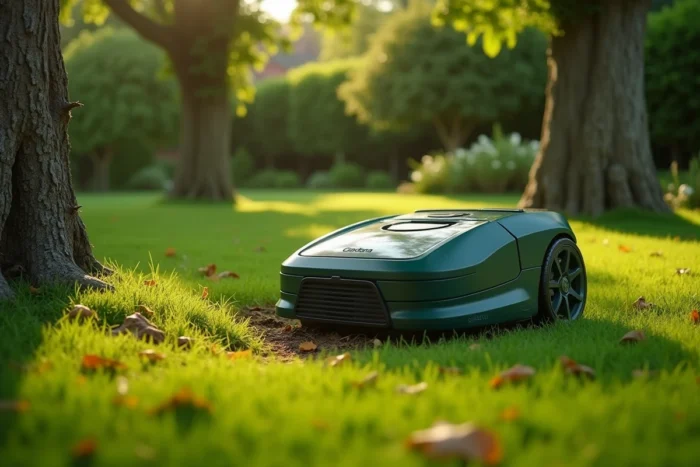
Regular maintenance remains simple: cleaning the chassis after each extended session, checking the blades every few weeks, and visually inspecting the wheels for wear. Dull blades degrade cutting quality and damage the grass by tearing the grass instead of cutting it.
- Replace the blades as soon as brown marks appear on the tips of cut grass
- Clean the underside of the robot to prevent the accumulation of debris that hinders rotation
- Store the robot in a sheltered place during winter, with a partially charged battery, to preserve its longevity
Local Subsidies for Purchasing a Robotic Mower
Some local authorities offer financial assistance for the purchase of electric or robotic gardening equipment. Some metropolitan areas provide subsidies for the purchase of a low-consumption robotic or electric mower, as has been reported in Lyon. These programs remain local and subject to specific criteria for replacement and eligible equipment.
Checking with your intercommunal authority or metropolitan area to see if a similar program exists can help reduce the entry cost of a Sileno. This type of assistance applies to both wired and wireless models, provided that the device meets the energy consumption criteria defined by the local authority.
The pricing strategy of the Sileno range, which is more accessible than the Automower from the same Husqvarna group, combined with these occasional aids, places the actual acquisition cost in a competitive range for a connected robotic mower. The most significant factor in the final calculation remains the cost of the replacement battery after a few seasons, an expense that is rarely anticipated at the time of purchase.